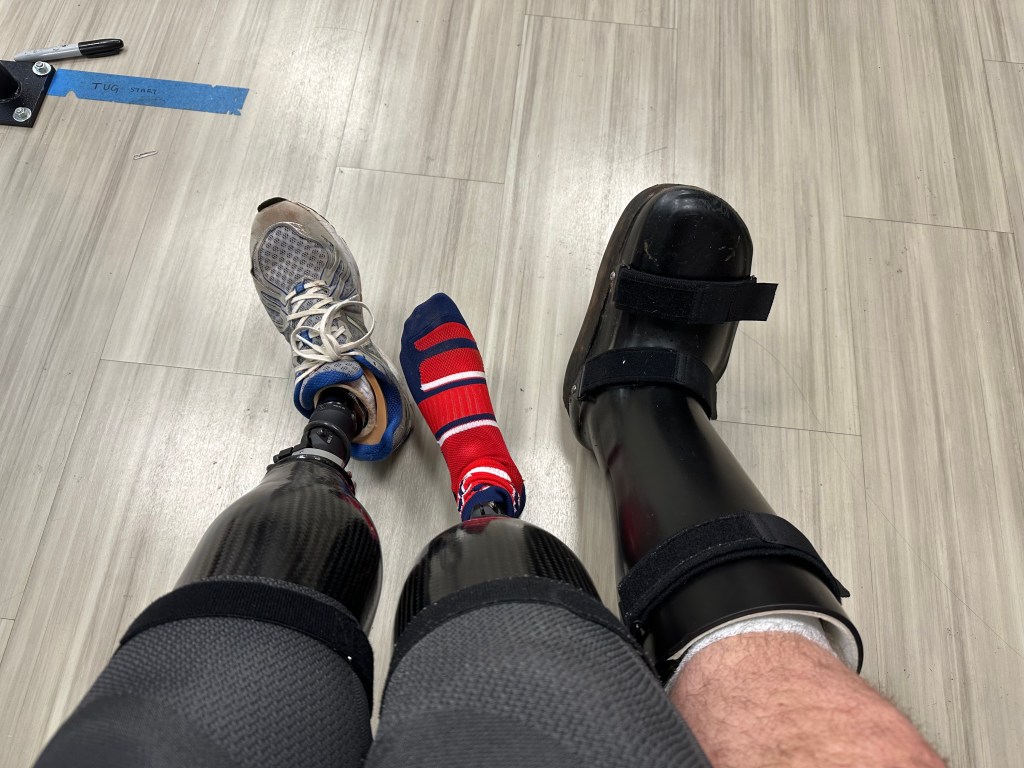
After my leg was amputated, I spent a month in a nursing center where the primary goal was to simply teach me how to get through my day to day life while only having one leg (this was after having been in the hospital for a month). Throughout those first few weeks and months, it was amazing to me how seemingly unrelated things (like rolling over in bed) often involved my legs and were impacted by the amputation. But spending multiple hours everyday in occupational and physical therapy helped provide tangible solutions to the new found dilemmas that were coming up.
Now that about two and a half years have passed since my amputation, I’ve adapted reasonably well and I’ve actually had a few people say they feel like I get around better now than I did before the amputation. That’s in large part because I had a good medical team that offered concrete solutions for how to adapt that have now become second nature. They also provided strategies to help think through what I need to do if I encounter a new situation that’s impacted by being an amputee.
One of the interesting things I have found, however, is that there seems to be an endless supply of well meaning strangers who offer up all sorts of unsolicited generic advice or motivational sayings when they see me. More often than not, the comments come from a place of wanting to be helpful but have absolutely no actual relevance to my situation. And based on what I’ve heard from other members of the disability community, I’m far from the only person who has these types of interactions.
A consistent theme I’ve heard from people, especially as someone who serves on the local Disability Services Board and works in the world of advocacy, is that this type of mentality also influences the behavior of some nonprofits and businesses that cater to the disability community. It’s this concept that was part of the discussion in the book Brilliant Imperfection: Grappling with Cure by Eli Clare.
Eli highlights that while there is some fantastic research being done by large organizations that could produce promising results in the future, it’s often smaller local orgs that provide solutions that have a tangible impact on people’s lives.
“Zoe’s Race is motivated by the value of accessibility rather than cure. The money raised goes towards something concrete, improving people’s present day lives, rather than something intangible centered on the future,” Eli wrote about a relatively small non-profit organization that uses 5k races to help raise money that’s used to install ramps, accessible bathrooms, and other upgrades in homes. “It offers practical help to families in the local community rather than supporting a national effort that impacts research.”
Just like the tangible solutions my medical team gave me in the first few weeks as an amputee, these upgrades have an incredible impact on the lives of folks with disabilities. I know just having a ramp to get into my house or grab bars in my bathrooms make the world of difference for me, even on days I’m using my prosthetic.
To help further reinforce how it’s so important to focus on what’s actually providing immediate benefit to people with disabilities rather than trying to “cure” them, Eli also highlighted how many pharmaceutical companies actually use the search for a “cure” to advance their financial bottom line rather than advancing medical treatments that are truly needed. This inevitably leads to the question of who does the quest for a cure really benefit.
A prime example of this comes from Eli Lilly’s quest to expand the use of HGH. Prior to 2003, the company was only approved to sell HGH to people who had a medical condition related to height. But when they were allowed to sell it to kids in the bottom 1.2% of height for their age group regardless of their medical status, their profits soared. Three years later, their profits hit $460 million a year (a 40% increase compared to the year before the expanded use was approved).
When these enormous profits are considered, you can’t help but wonder what would happen if that type of money was spent on making the world more accessible for people regardless of their height. While the drug Eli Lilly sold likely did help some people who didn’t have a relevant medical condition, I can’t help but wonder how the world would have been improved by focusing on ways to make the world more accessible rather than assuming we have to “cure” someone who doesn’t fit “normal standards” that society has imposed on people.
While this post has focused on the impact providing tangible solutions rather than some overly generic research or motivational saying can have on the disability community, this concept can be applied to a variety of different solutions. If a business is trying to figure out how to get new clients, for instance, it should offer tangible solutions that provide people with an obvious reason to use the business.
I’m not saying we never even consider using a telescope to look far off into the future for something that perhaps isn’t even imaginable right now, but it shouldn’t prevent us from using a microscope to focus on providing tangible results right now. It’s the nitty gritty details of the tangible solutions that can have a meaningful impact on our lives and set us up for success when the far off measures are finally reached.
 Ambivalent Mumblings
Leave a comment